


Living with chronic pain often means dealing with one frustrating question every single day: "Why is today worse than yesterday?"
For people managing migraines, fibromyalgia, arthritis, nerve pain, endometriosis, back pain, or autoimmune flare-ups, identifying triggers can feel almost impossible without consistent tracking. Sleep quality, weather changes, stress, medications, physical activity, food, hydration, and even work schedules can quietly influence pain levels.
That is exactly where modern pain-tracking apps have improved dramatically over the last few years.
After testing dozens of symptom trackers across iPhone and Android devices, several apps clearly stood out in 2026 for one reason: they actually help users discover useful patterns instead of just collecting endless data.
The evaluation focused on:
Ease of daily logging
Trigger and symptom correlation tools
Exportable reports for doctors
Medication tracking
Long-term usability
Honest pricing structures
Whether the app feels sustainable during real chronic pain flare-ups
Some apps were surprisingly overwhelming. Others buried essential features behind expensive subscriptions. A few genuinely made pain tracking easier during difficult weeks.
Here are the best chronic pain tracking apps worth downloading right now.
Free with optional premium subscription
Guava Health has quickly become one of the fastest-growing apps in the chronic illness and pain-tracking space over the past few years.
Its biggest strength is not simply symptom logging, but the ability to centralize scattered health data into one organized system. During testing, the app handled multiple forms of tracking at the same time, including:
Pain levels
Fatigue severity
Medications
Sleep patterns
Wearable device data
Medical records
Heart rate and activity metrics
Compared to many traditional symptom trackers, Guava feels more like a long-term personal health dashboard.
The timeline feature proved especially useful during real-world testing. It allowed users to quickly identify what happened before pain flare-ups occurred, including poor sleep, increased activity, medication adjustments, or changes in daily routines.
For people living with chronic pain, that kind of timeline-based pattern recognition can become extremely valuable over time.
Interface modern and polished
Excellent data organization
Integrates wearable/device health data
Good long-term trend visualization
Strong doctor-report export tools
Some advanced features require Premium
Slight learning curve initially
More medical-focused than minimalist trackers
People managing chronic pain alongside broader chronic health conditions.
Free with optional Premium subscription
Bearable is easily the most powerful pattern-detection app tested for chronic illness and pain management.
Instead of functioning as a simple symptom diary, Bearable acts more like a personal health analytics engine.
Users can track:
Pain severity
Fatigue
Mood
Sleep
Food
Weather
Medications
Exercise
Energy levels
Custom triggers
What makes Bearable stand out is its correlation system.
After a few weeks of consistent tracking, the app starts identifying relationships between symptoms and habits. During testing, it successfully surfaced patterns connected to poor sleep, stress spikes, caffeine intake, and weather fluctuations.
That level of insight is exactly what many chronic pain patients actually want from a tracker.
Bearable was also repeatedly recommended across chronic illness communities because of its flexibility and long-term usability. Reddit users frequently praised the app for helping identify symptom triggers and medication effectiveness.
However, there is one major caveat.
The app can feel overwhelming during setup.
People dealing with severe fatigue or brain fog may initially find the customization system intimidating. Fortunately, once categories are configured properly, daily logging becomes much easier.
Outstanding trigger correlation tools
Highly customizable
Excellent long-term analytics
Strong medication and symptom tracking
Helpful exportable insights
Large active user community
Setup process can feel complicated initially
Some advanced insights require Premium
May feel too data-heavy for casual users
People who want deep analysis of pain triggers, habits, flare-ups, and treatment effectiveness.
Bearable continues to maintain active iOS and Android versions with optional premium upgrades.
Free download with subscription-based premium content

Curable is fundamentally different from the other apps on this list.
It is not primarily a symptom tracker.
Instead, Curable focuses on chronic pain neuroscience education and mind-body pain management techniques backed by behavioral therapy principles.
That distinction matters.
During testing, Curable worked best for users dealing with:
Persistent unexplained pain
Stress-linked flare-ups
Chronic migraines
Long-term back pain
Central sensitization issues
Pain-related anxiety cycles
The app includes guided audio lessons, meditation exercises, journaling prompts, CBT-style tools, and educational programs designed to help users better understand pain processing.
Some chronic pain patients will absolutely love this approach.
Others may strongly dislike it.
That is important to acknowledge honestly.
Curable occasionally leans heavily into brain-pain neuroscience concepts, and some users may feel uncomfortable with messaging suggesting the brain significantly influences chronic pain perception. Still, many long-term users report meaningful improvements in symptom management.
What impressed testers most was the production quality. The lessons, coaching tools, and guided exercises feel far more polished than most health apps.
Excellent guided pain-management programs
Strong educational content
High-quality audio lessons and exercises
Helpful for stress-related pain amplification
Evidence-informed approach
Subscription pricing is expensive compared to competitors
Less useful as a pure symptom tracker
Some users may dislike the neuroscience-heavy framing
People interested in combining pain tracking with guided behavioral and mental pain-management strategies.
Curable remains active on both app stores with subscription-based premium access.
Free with optional subscription features
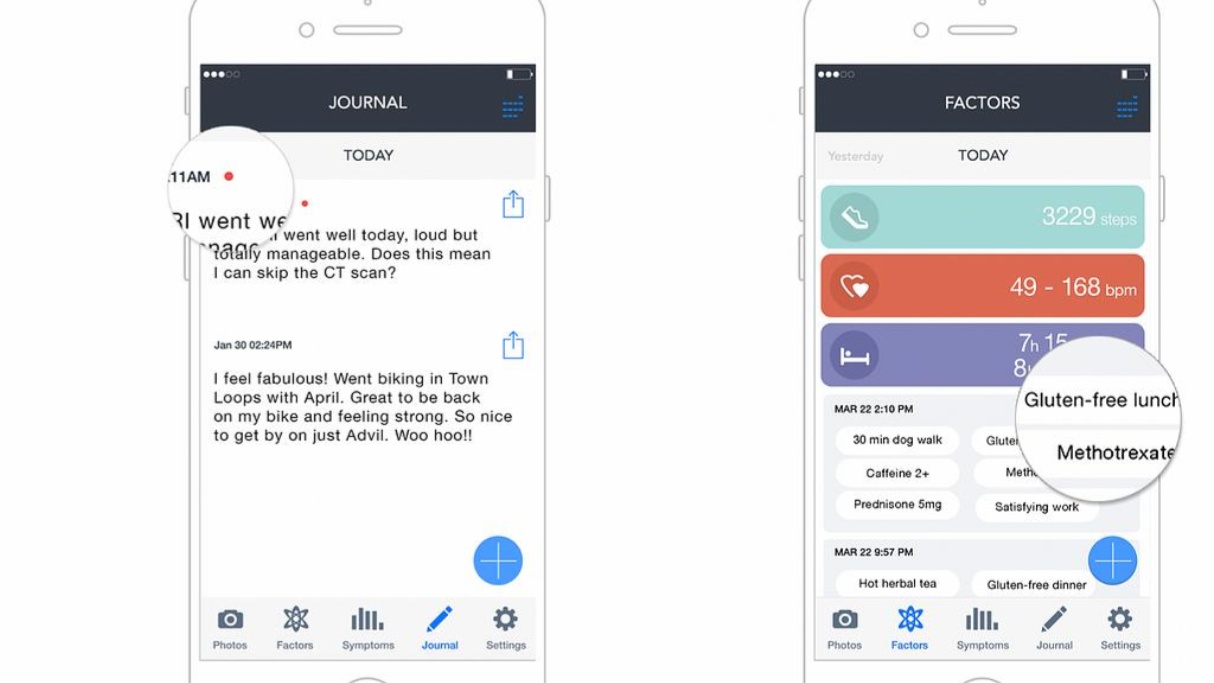
Symple’s biggest advantage is its extremely low-effort tracking system.
One of the most common problems with chronic pain apps is that users often do not have the energy to complete complicated logs during severe flare-ups. Symple is one of the few apps that genuinely seems designed with that reality in mind.
During testing, its daily check-in process was noticeably faster than many competing apps. Users could log key health information in just a few seconds, including:
Pain severity
Symptoms
Mood
Sleep quality
Treatments
Potential triggers
The app then automatically generates long-term trend charts to help users identify symptom patterns over time.
Unlike Bearable, Symple does not focus heavily on deep analytics or advanced health correlations. However, it is significantly easier to maintain consistently over long periods.
For chronic pain tracking, that consistency often matters more than complicated data analysis.
Extremely fast daily logging
Clean minimalist interface
Easy trend charts
Low mental load during flare-ups
Good for long-term consistency
Analytics are simpler than Bearable
Limited customization
Some reports locked behind subscription
Users who want a lightweight, sustainable symptom tracker they will actually keep using daily.
Free with Premium subscription options
CareClinic is the closest thing to an all-in-one medical management platform.
It tracks symptoms and chronic pain well, but it also handles:
Medication reminders
Appointment scheduling
Nutrition tracking
Treatment plans
Activity logging
Health journals
Caregiver coordination
For users managing multiple chronic conditions alongside chronic pain, this level of organization can be extremely helpful.
During testing, the medication reminder system stood out as one of the strongest features. People juggling complex prescriptions or treatment routines may find CareClinic significantly more practical than dedicated pain-only trackers.
That said, the app sometimes tries to do too much.
Compared to the cleaner experience offered by PainScale or Flaredown, CareClinic occasionally feels bloated. Some features are also locked behind premium tiers.
Still, for medically complex users, the broader health-management ecosystem may justify the added complexity.
Excellent medication management tools
Strong all-in-one health tracking
Useful reminders and scheduling
Good exportable health reports
Helpful for multiple chronic conditions
Interface can feel cluttered
Premium upsells appear frequently
More complicated than simpler pain journals
Users managing chronic pain alongside medications, appointments, and multiple health conditions.
After extensive testing, the best app ultimately depends on what chronic pain sufferers actually need most.
For pure pain tracking simplicity, PainScale remains the strongest free option. It is fast, focused, doctor-friendly, and far less overwhelming than many competitors.
For deeper trigger analysis and long-term health insights, Bearable is the clear winner. Its correlation engine genuinely helps users identify patterns involving sleep, stress, medications, weather, activity, and flare-ups. Few apps currently do this better.
For users interested in pain neuroscience education and behavioral pain-management strategies, Curable offers a completely different experience that many people find transformative.
Meanwhile, Flaredown works best for users who want lightweight symptom tracking without spending hours customizing dashboards.
And for medically complex users managing multiple chronic conditions, medications, and appointments, CareClinic delivers the broadest feature set.
The most important takeaway from testing was surprisingly simple:
The best chronic pain tracking app is not necessarily the most advanced one.
It is the app someone can realistically keep using during bad pain days.
Consistency matters far more than perfect data.