

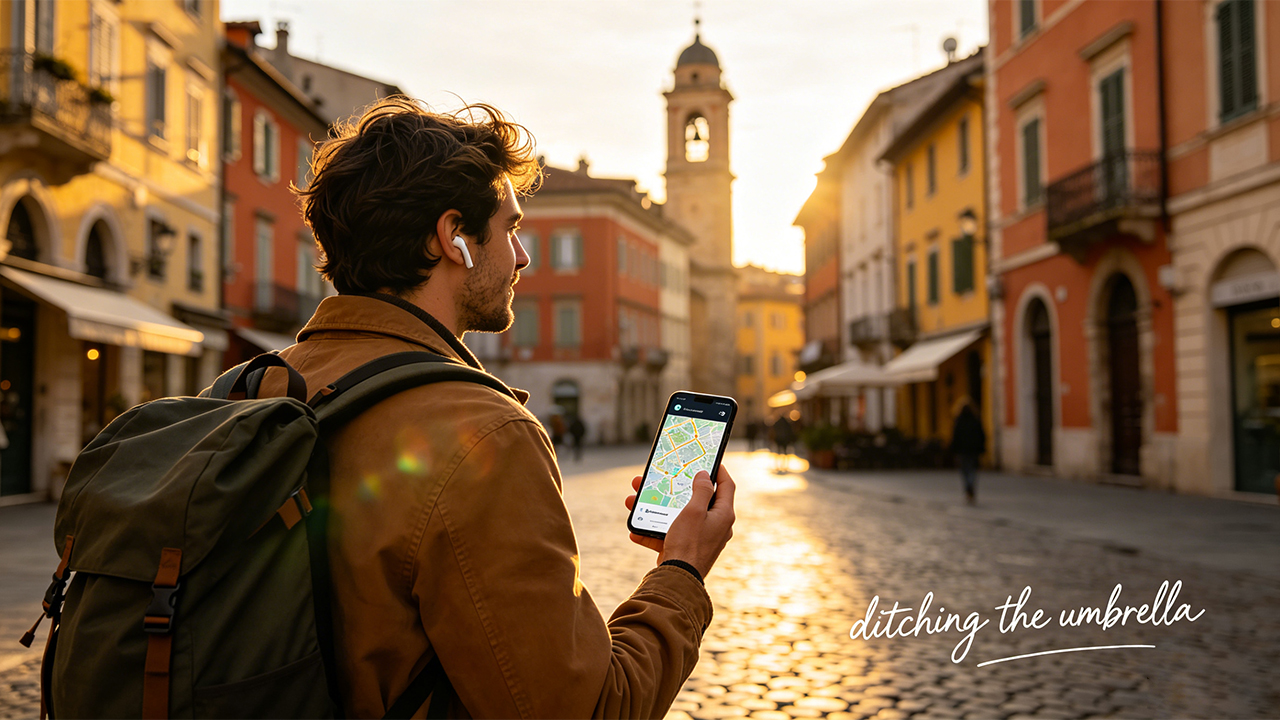
The Hunt for a Tour Guide That Won‘t Keep You on a Leash
There is a particular frustration that hits about forty-five minutes into a bad walking tour. The guide is racing through a script you stopped caring about three piazzas ago, their feet hurt, and you have just spotted the perfect café on a side street — but the group is already turning the corner. You cannot stop. You cannot linger. You are on someone else‘s clock, and you paid fifty euros for the privilege.
This is the pain point that self-guided audio walking tour apps solve, and they solve it completely. Instead of chasing a raised umbrella through cobblestone streets, you put in your earbuds, press play, and explore at your own rhythm. When a gelato shop calls your name, you pause. When a detail fascinates you, you rewind. The best part? Most of these apps cost less than a single museum admission, and one of them is entirely free.
The market has grown crowded in 2026. AI-generated tours flood app stores with promises of endless coverage, while human-created platforms fight back with storytellers who actually know the neighborhoods they narrate. Cutting through the noise requires testing these apps on the ground — which is exactly what we did across four European cities this spring. We evaluated each app on three criteria: production quality of the audio, reliability of GPS navigation, and transparency of pricing. No sponsored placements. No affiliate links. Just honest findings.
Pricing Model: Free download; individual tours typically 6–6–9 each. Tours are purchased per person and cannot be shared across devices.
VoiceMap is not new, but in 2026 it has become the app that serious independent travelers keep returning to. The company published its 2,026th tour in the first week of this year, and that number has climbed steadily since — a milestone that says more about the platform‘s endurance than any marketing tagline could. Coverage now spans over 600 destinations worldwide, with particularly deep catalogs in European cities like London (over 100 tours), Paris, Rome, Berlin, and Barcelona.
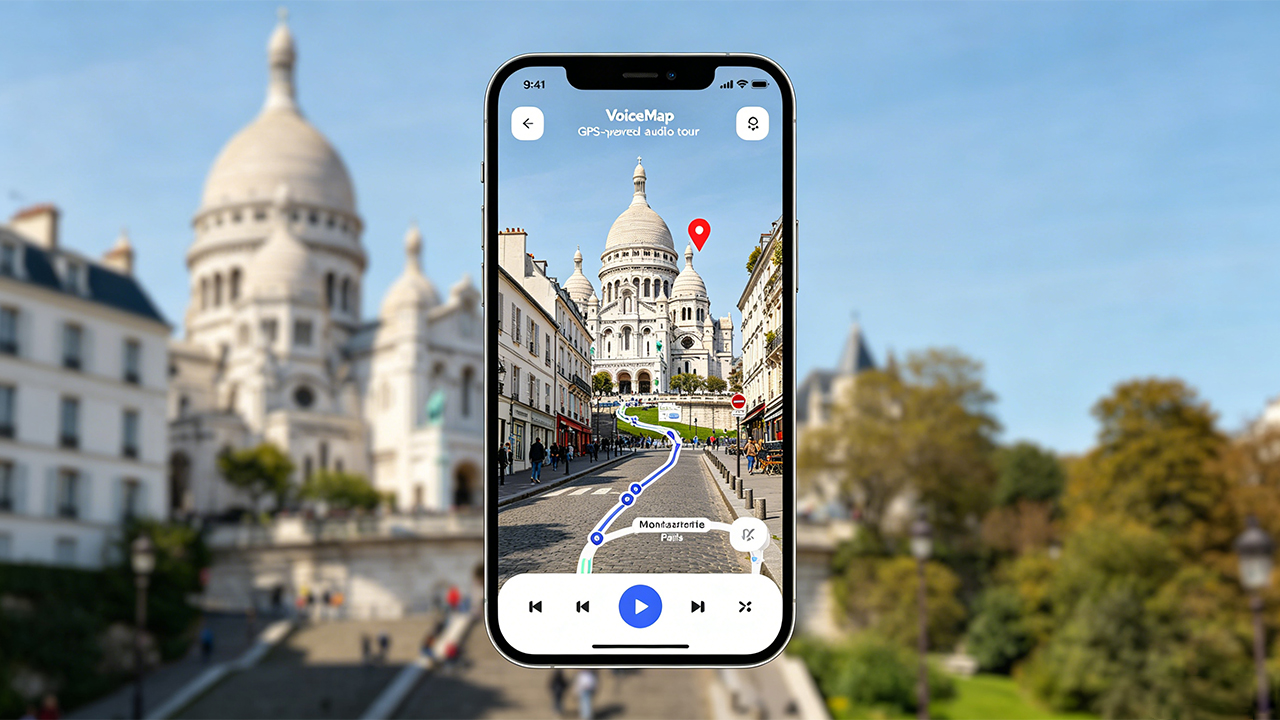
When we tested VoiceMap on the Old Town walk in Zürich and the Montmartre route in Paris, the core mechanic — GPS-triggered audio playback — worked exactly as advertised. Walk toward a landmark, and the narrator begins speaking. Turn the wrong way, and a gentle voice in your ear says something like, “You‘ve veered off course — turn around when you’re ready.” The experience feels uncanny, almost like having a real guide who can see where you are standing.
Behind the scenes, VoiceMap uses a carefully planned sequential route structure. Each tour is built around individual GPS-tagged locations along a narrative arc, which means stories build on what you have already heard rather than delivering disconnected encyclopedia entries at each stop. This is the difference between feeling like you are listening to a podcast that moves with you and feeling like you are being read a Wikipedia article aloud.
Offline functionality is robust. Download the tour on hotel Wi-Fi, and the app requires no data connection during the walk — a genuine money-saver when roaming charges apply. Battery drain was moderate; a fully charged iPhone 15 lasted through a two-hour tour with about 35% battery remaining.
VoiceMap‘s big differentiator in 2026 is its aggressively human-first approach. As AI-generated travel content floods the market, VoiceMap has doubled down on what it calls “curiously human self-guided tours,” partnering with the likes of Stephen Fry and historian Dan Snow to create exclusive narrated experiences in London. Local journalists, novelists, and podcasters produce the bulk of the catalog, and it shows in the storytelling depth.
Pros:
GPS auto-play is genuinely hands-free — tap start, pocket your phone, and walk.
Narration quality is consistently high; tours are produced by real storytellers, not text-to-speech engines.
Offline maps and audio are included with every downloaded tour.
Virtual Playback mode lets you listen to tours at home as a podcast or preview before your trip.
Coverage includes niche destinations (Tarragona, Ronda) where traditional group tours cannot survive economically.
Cons:
Per-tour pricing adds up quickly if you are visiting multiple cities. There is no all-access subscription.
Tours are locked to a single device — a couple traveling together must buy the same tour twice.
Quality varies by creator. Most tours are excellent, but we found one in a smaller city that felt like a rushed student project.
Indoor tours (museums, galleries) rely on photos instead of GPS, which works but feels clunkier than the outdoor experience.
Pricing Model: Completely free. No in-app purchases, no subscriptions, no ads.
If VoiceMap is the polished newcomer, Rick Steves Audio Europe is the grizzled veteran that refuses to retire — and travelers are better off for it. This app organizes the vast library of Rick Steves‘ audio content into city-specific playlists, drawing from decades of guidebook research and his public radio program.
The Reality Check: Is Free Actually Good?
Let‘s be blunt: free apps usually come with a catch. Rick Steves Audio Europe does not. Download the audio files on Wi-Fi before your trip, and they play offline with zero data usage — the app stores everything on your device. We tested the Rome walking tours (Colosseum, Roman Forum, Pantheon, and a Trastevere neighborhood stroll) and found them to be dense with historical context, clearly structured, and remarkably engaging. One App Store reviewer who visited Rome and Vatican City wrote that they “ended up asking our tour guide that we would leave and do the tour ourselves as this tour is far more engaging”.
The trade-off is production values. Rick‘s tours are essentially well-researched monologues accompanied by PDF maps you can view on your screen. There is no GPS auto-play, no turn-by-turn audio cues, and no automatic detection of where you are standing. You navigate yourself using the provided map, pausing and resuming the audio manually. For tech-savvy travelers accustomed to GPS-guided apps, this can feel archaic. For everyone else, it works perfectly fine.
Another trade-off worth noting: some content is dated. One reviewer noted that “some pieces were a tad outdated”. A handful of museum tours reference ticket prices and opening hours from pre-pandemic guidebooks. If you are the type who needs bleeding-edge accuracy on practical details, double-check logistics separately. But the historical and cultural content — the reason you download an audio tour in the first place — holds up remarkably well.
Coverage focuses on major European hubs: Paris, Rome, London, Barcelona, Amsterdam, and major museums like the Louvre, the Accademia, and the Vatican. You will not find tours for smaller cities, and the selection within each city is curated rather than exhaustive.
Pros:
It is genuinely free. Download every tour for your trip without spending a cent.
Rick Steves‘ narration is warm, knowledgeable, and paced for curious travelers rather than academics.
PDF maps are included for all walking tours, providing visual navigation when needed.
Audio quality is excellent; these are professionally recorded, not compressed to save space.
Kids- and family-friendly; one reviewer noted that Rick‘s tours “made my kids excited to spend a whole hour” at ancient ruins.
Cons:
No GPS integration whatsoever — you must navigate yourself and manually trigger audio.
Some content is outdated on practical details like prices and hours.
Coverage is limited to major European destinations; you will not find tours for places like Porto, Kraków, or Seville.
The interface is basic and utilitarian; it prioritizes function over design.
Pricing Model: Free download with limited features. Annual subscription: 14.99forcitywalksonly,14.99forcitywalksonly,14.99 for travel articles only, or $20.99 for everything. A 3-day free trial is available.
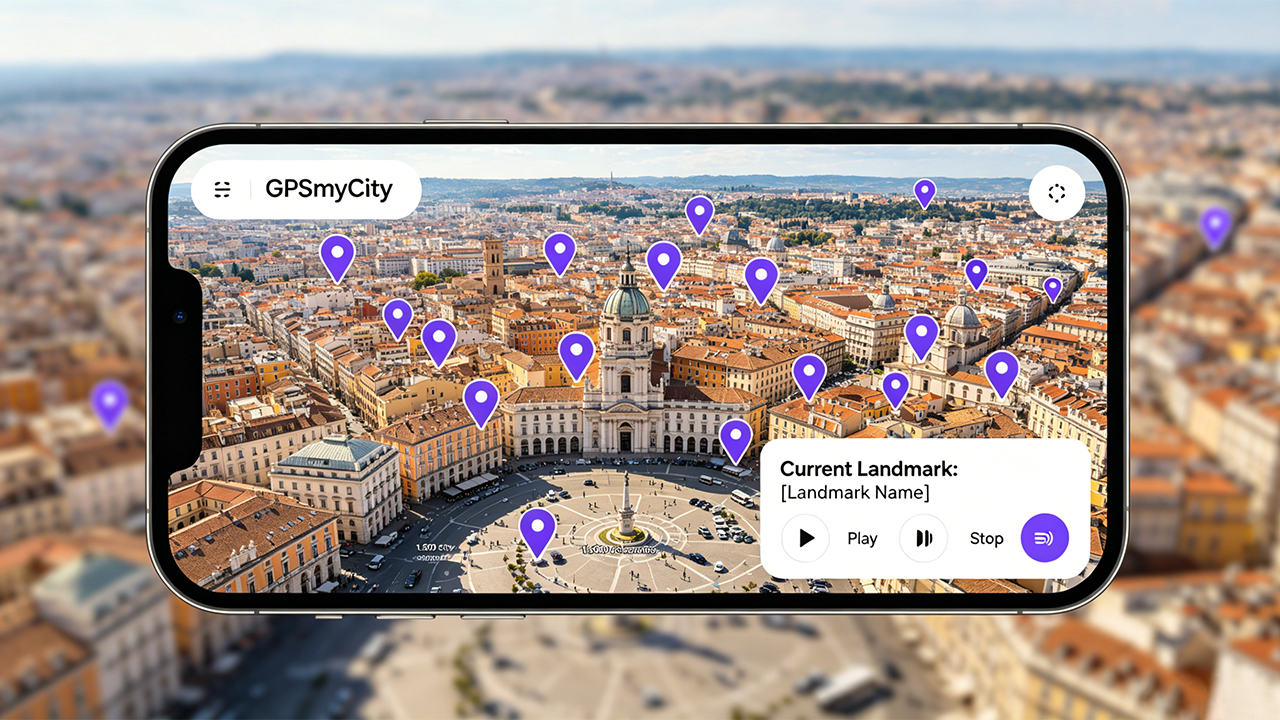
GPSmyCity is the quantity-over-quality champion of the audio tour world. With coverage in over 1,500 cities — from Rome to Raleigh to Trabzon to Tokyo — no other app comes close in geographic breadth. If you are visiting a smaller European city that VoiceMap and Rick Steves ignore entirely, GPSmyCity probably has something for you.
The Reality Check: How Deep Is an Ocean That‘s an Inch Thick?
The answer depends on your expectations. GPSmyCity‘s tours are primarily route-based navigation tools with short written descriptions and brief audio clips rather than immersive storytelling experiences. One reviewer described the voice as “goofy” — clear but synthetic, lacking the natural cadence of a human narrator. The content depth varies wildly by city; major destinations like Paris and Rome have reasonably thorough tours, while smaller cities might offer only basic route guidance with a handful of facts.
The app‘s real strength is its flexibility. Unlike VoiceMap‘s fixed routes, GPSmyCity lets you pick and choose which landmarks to visit, effectively building your own walking itinerary. Travel articles can be converted into map-based walking tours — a genuinely useful feature for DIY travelers.
Offline functionality is a selling point. Downloaded city maps work without data, and the GPS navigation provides turn-by-turn directions along your chosen route. For travelers who prioritize not getting lost over cultural immersion, this is perfectly adequate.
The elephant in the room is advertising. The free version serves persistent ads, and user reviews mention billing complications with free trial cancellations — not outright scams, but enough friction that you should set a reminder to cancel if you do not plan to subscribe.
Pros:
Coverage in 1,500+ cities dwarfs all competitors.
Offline maps and GPS navigation work reliably.
Customizable routes let you build your own walking tours.
Annual subscription (14.99–14.99–20.99) is the cheapest all-access option on the market.
Particularly useful for cruise travelers who need quick, functional orientation in multiple ports.
Cons:
Audio quality is inconsistent and often robotic.
Storytelling depth is shallow; these are route guides, not immersive narratives.
Free version is ad-supported and feels naggy.
Billing and free trial management have generated user complaints.
Tour quality varies significantly between cities.
Pricing Model: Free download with 24-hour free trial. Subscription: 9.99/month,or9.99/month,or99.99 lifetime pass. Ten-day and one-week passes are also available at lower price points.
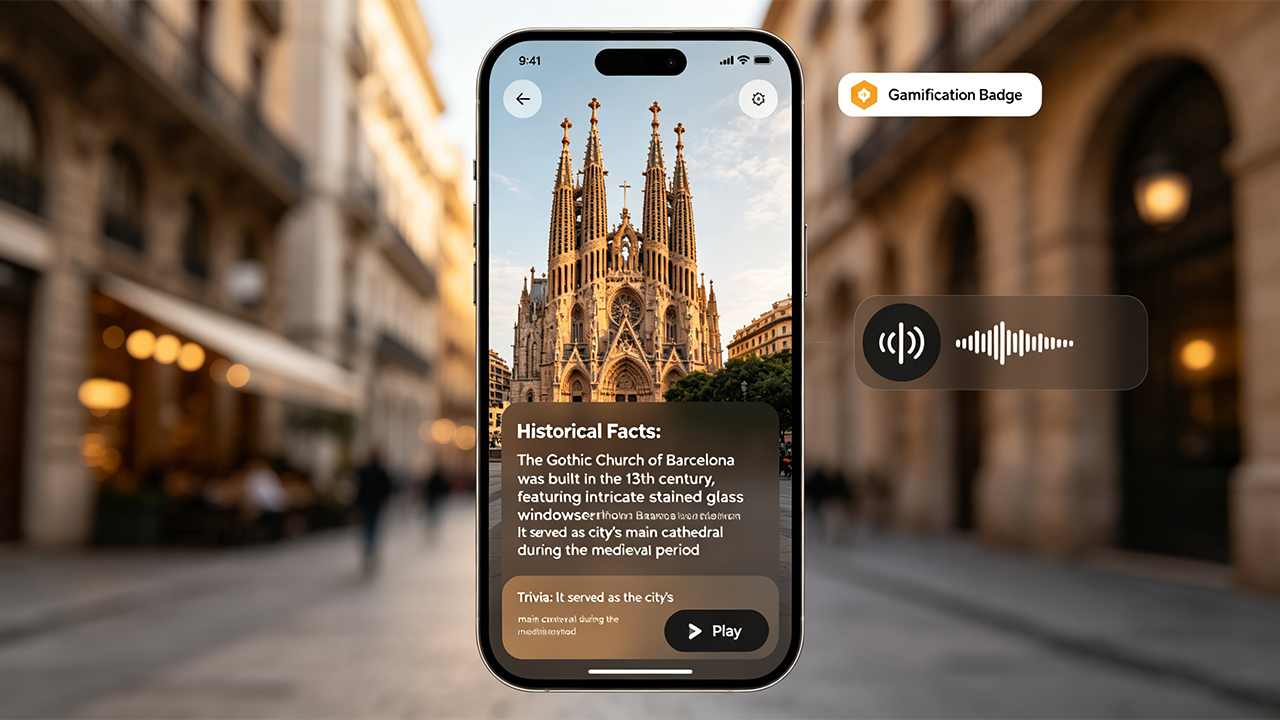
Audiala is the newcomer in this roundup, and it represents a fundamentally different approach to audio tours. Instead of human-produced, route-based tours, Audiala uses AI to generate audio narration for over 50,000 points of interest across more than 1,000 cities in 11 languages. Walk near any landmark, and the app automatically triggers a narrated overview pulled from its database.
The Reality Check: Can a Robot Be a Good Tour Guide?
When we tested Audiala in Rome and Barcelona, the experience was… mixed, in ways that are important to understand before you subscribe.
The good: sheer coverage is staggering. Every fountain, church, monument, and plaza triggers something. If you are the type of traveler who wants context on everything you pass without planning a specific route, Audiala delivers. The AI trip planner — where you can type “3 hours in Rome with kids, focus on ancient history” and receive a custom itinerary — is genuinely clever and worked well in our tests.
The less good: AI-generated narration, while factually accurate, lacks the warmth, humor, and narrative arc that make human-produced tours memorable. You will learn facts. You will not hear stories. The narration voice, while clear, has the smooth but slightly flat quality typical of advanced text-to-speech engines. After an hour, it starts to feel like listening to a very well-researched Wikipedia entry read aloud.
Audiala also includes a gamification system with badges, streaks, and levels, plus an AI chat feature for asking questions about monuments or getting travel tips. Whether these features add value or clutter depends on your travel style. Solo travelers who want constant context may embrace them; travelers seeking a focused, curated experience may find them distracting.
The subscription model is straightforward, and a 24-hour free trial lets you test the app before committing. At 9.99/monthor9.99/monthor99.99 for lifetime access, Audiala is reasonably priced compared to booking even one or two in-person guided tours.
Pros:
Coverage across 1,000+ cities and 50,000+ landmarks is essentially unlimited.
AI trip planner generates custom itineraries based on your specific interests and time constraints.
Works in 11 languages, including English, French, German, Spanish, Italian, Japanese, and Chinese.
Full offline mode; download entire cities before your trip.
SharePlay support for listening with travel companions.
Cons:
AI narration lacks the personality, humor, and narrative depth of human storytellers.
No structured, sequential tours — content is point-by-point rather than a cohesive story arc.
Gamification elements feel gimmicky for travelers who just want a straightforward guide.
The app is relatively new and has few user ratings available for verification.
Subscription model means ongoing cost for frequent travelers who might prefer one-time purchases.
Pricing Model: Free download; individual audio guides typically €5–€10 each. The Louvre audioguide, for example, is €9.99.
TouringBee occupies a specific niche in the audio tour ecosystem: tours created by locals who live and work in the cities they narrate, with a strong emphasis on authentic pronunciation, insider knowledge, and clear, easy-to-understand English. It does not try to compete on coverage breadth (VoiceMap wins that) or price (Rick Steves wins that). Instead, it competes on local authenticity.
The Reality Check: Does Local Really Mean Better?
When we tested TouringBee‘s Paris and Amsterdam tours, the most immediately noticeable difference was the narration quality — not in terms of production values, but in terms of cultural fluency. Street names are pronounced correctly. References to local customs feel organic rather than researched. The guide for the Amsterdam Jordaan district, for instance, included anecdotes about neighborhood feuds and hidden courtyards that felt like they came from someone who had walked those streets for years, not someone who had read about them.
The app features GPS-triggered audio and interactive maps, and it works fully offline after downloading — no roaming fees, no data connection required. The interface is simple and easy to use, with clear controls for starting, pausing, and replaying segments.
Coverage is the main limitation. TouringBee offers tours in major cities across Europe and some destinations in Asia, but the catalog is smaller than VoiceMap‘s and grows more slowly. You will find solid options in Paris, Amsterdam, and Barcelona, but you may come up empty for second-tier cities.
Pricing follows the per-tour model (similar to VoiceMap), with individual guides typically ranging from €5 to €10. This is reasonable for a city with one or two tours you want, but less attractive for multi-city itineraries.
Pros:
Narration by local residents provides authentic cultural context and accurate pronunciation.
GPS auto-play and interactive maps work smoothly.
Offline functionality is reliable with no data usage during tours.
Simple, clean interface with minimal learning curve.
Audio guides are well-paced and easy to follow, even for first-time audio tour users.
Cons:
City coverage is limited compared to VoiceMap and GPSmyCity.
Per-tour pricing adds up for multi-city trips.
No subscription option for travelers who want all-access.
The app has fewer user reviews than more established competitors, making quality harder to gauge pre-purchase.
After testing these five apps across multiple European cities, the answer is not a single app — it depends entirely on what kind of traveler you are.
Travelers seeking the best overall experience — and willing to pay per tour — will likely prefer VoiceMap. Its combination of GPS auto-play, human storytellers, offline reliability, and narrative depth makes it the closest thing to a private tour guide you can fit in your pocket. The per-tour pricing stings if you are visiting six cities, but the quality justifies the cost. Start with one tour in your first city.Travelers who enjoy the experience should expect to budget for additional tours.
Budget-conscious travelers should download Rick Steves Audio Europe immediately.It is free, the content is genuinely good, and the historical depth often exceeds what paid competitors offer. The lack of GPS navigation is annoying, but for the price of zero dollars, it is a trade-off worth making. Downloading every relevant tour before departure is highly recommended — unused downloads can always be removed later.
Travelers visiting multiple smaller cities and needing basic orientation throughout a trip, GPSmyCity‘s $20.99 annual subscription is the best value proposition on the market. The trade-off is breadth over depth. Setting a reminder to manage the free trial is advisable, and bring an external battery pack if you plan to use GPS navigation all day.
Travelers wanting unlimited, on-the-fly coverage of nearly every landmark they pass, Audiala‘s AI engine delivers. The subscription model makes sense for travelers who plan to visit several cities and want constant context without buying individual tours. The key limitation is that AI narration feels factual rather than soulful— you will learn a lot, but you will not be told a story.
Travelers who prioritize local authenticity over broad coverage, TouringBee is worth checking for your destination. When a strong TouringBee tour exists for a destination, the insider perspective often beats VoiceMap‘s more polished but sometimes less personal offerings.
Regardless of which app travelers choose,tours should be downloaded before leaving hotel Wi-Fi. Pack a portable charger. And when travelers pass the perfect café on a side street, pausing the tour for a gelato remains part of the appeal.