

Traditional field guides can feel frustrating for beginners. They assume you can clearly see the bird, compare feather patterns, judge size, notice beak shape, and somehow distinguish between two sparrows that look almost identical. In real life? Birds rarely sit still long enough to cooperate.
The breakthrough came when birding apps stopped focusing only on photos and started listening instead.
Over the last few years, audio-recognition tools have gotten shockingly good. Your phone can now pick up a call from deep in the trees, isolate it from wind noise or traffic, and tell you which species made it — often in real time. Some apps even track multiple birds singing at once, almost like subtitles for the outdoors. After testing the biggest names across parks, hiking trails, and noisy suburban backyards, a few stood out for speed, accuracy, offline support, and overall usability.
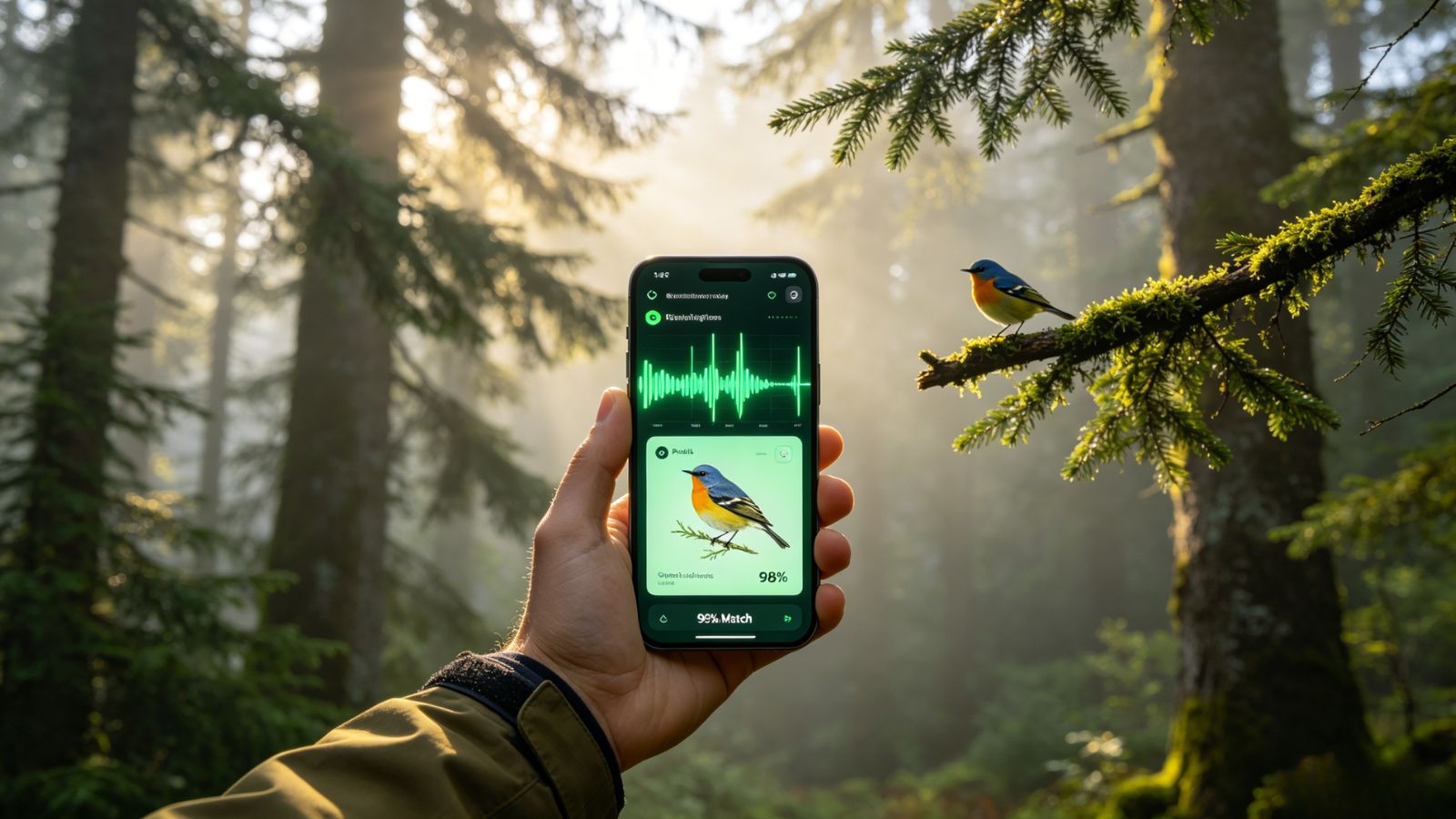
Merlin feels a little magical the first time you use it.
You open the Sound ID feature, point your phone toward the trees, and suddenly the app starts identifying birds live as they sing. One after another. A cardinal here. A blue jay there. Maybe a woodpecker tapping somewhere in the background. The screen lights up in real time while a live spectrogram scrolls underneath like an audio heartbeat of the forest.
And somehow, it’s incredibly accurate.
Built by the Cornell Lab of Ornithology and powered by data from millions of bird recordings submitted through eBird and the Macaulay Library, Merlin has become the gold standard for casual birders and hardcore enthusiasts alike.
The best part? It’s completely free. No subscriptions. No ads constantly begging for upgrades. Download the regional bird packs once, and the app works offline too — which matters a lot once you lose signal halfway through a hiking trail.
It’s not perfect, though. Those downloadable bird packs take up a decent chunk of storage, and distant bird calls can still challenge your phone’s built-in microphone. But overall? Nothing else feels this polished.
Real-time identification of multiple birds at once
Excellent offline support for remote trails and parks
Massive species database covering regions worldwide
Completely free with no paywalls
Bird packs can eat up phone storage
Very faint or distant calls may require getting closer
BirdNET approaches bird identification differently.
Instead of listening live like Merlin, it works more like an audio analysis tool. You record ambient sound first, then manually highlight the clearest section of the bird call for the app to analyze. It’s slower, sure — but often more precise.
That extra control is exactly why researchers and serious hobbyists love it.
One of BirdNET’s best features is the confidence score system. The app doesn’t just throw out a guess and hope for the best. It tells you how certain the model actually is, which makes the results feel much more trustworthy when you’re dealing with difficult species.
It’s also lightweight and surprisingly powerful, capable of identifying thousands of species globally through cloud-based processing.
The tradeoff is convenience. BirdNET lacks Merlin’s smooth real-time experience, and without internet access, its functionality becomes limited unless you’re using the newer offline variants still rolling out.
Still, if Merlin is the friendly wilderness guide, BirdNET is the research assistant with a clipboard and a spectrogram chart.
Detailed confidence scoring
Strong accuracy for isolated recordings
Lightweight app with global species support
No fluid real-time tracking experience
Internet connection is still important for full functionality
Some people want research tools. Others just want to know what’s singing outside their kitchen window.
Smart Bird ID leans hard into that second group.
The app wraps bird identification inside a more playful experience — quizzes, badges, learning challenges, sighting journals, daily activities. It almost feels like Duolingo for birdwatching. That makes it especially approachable for kids, beginners, or anyone who finds technical birding apps intimidating.
The audio recognition works well enough for common backyard birds and urban species, especially in cleaner recording environments. The interface is colorful, simple, and easy to navigate without feeling cluttered.
But the subscription model is aggressive. Many of the better features sit behind recurring paywalls, and the app tends to struggle more with traffic noise, wind, and crowded city environments compared to the research-driven apps above.
If you’re casually exploring nature with family, it’s fun. If you want serious accuracy, you’ll probably outgrow it.
Friendly, beginner-focused design
Great educational tools and mini-games
Easy for kids and casual users to navigate
Expensive subscription tiers
Less reliable in noisy environments
Picture Bird started as a photo-identification app, but its audio tools have improved a lot over time.
The experience is intentionally simple: tap record, capture the sound, and wait a few seconds for the app to pull up a species profile complete with habitat maps, behavior details, and gorgeous photography. Honestly, the presentation is one of its biggest strengths. Everything looks sleek and polished.
For beginners, that matters.
Not everyone wants spectrograms and waveform analysis screens. Some users just want a quick answer and a nice-looking profile page explaining what they heard.
The frustration comes from the monetization. While the app is technically free to download, it pushes premium subscriptions constantly, and many features feel restricted unless you pay. It also depends heavily on cloud connectivity, so once your signal disappears on a remote trail, the experience starts falling apart fast.
Beautiful species profiles and visuals
Extremely simple recording process
Great for casual users who dislike technical interfaces
Heavy subscription upselling
Requires internet access for reliable performance
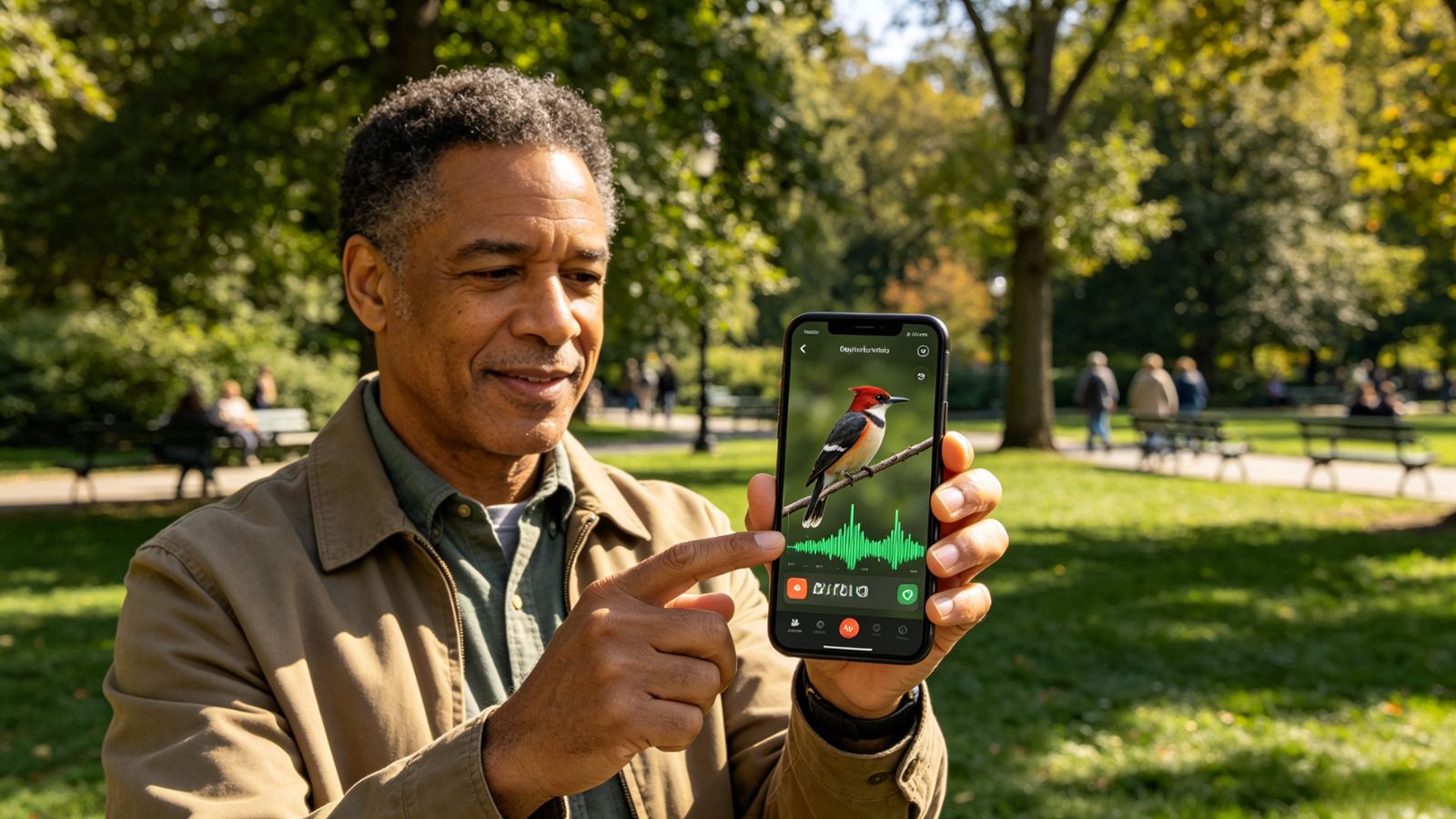
For most people, the answer is easy: Merlin Bird ID.
It’s free, absurdly capable, and somehow manages to make bird identification feel effortless. The app can stand in the middle of a noisy morning chorus, separate overlapping calls in real time, and identify species almost instantly — all without ads or subscription traps getting in the way.
That’s hard to beat.
If you’re more research-oriented and want detailed confidence analysis on specific recordings, BirdNET is an excellent companion tool. But for everyday walks, hikes, backyard birdwatching, or those random moments when something beautiful starts singing outside your window and you need to know what it is, Merlin is the one that keeps earning a permanent spot on people’s phones.