

For a lot of people, investing still feels intimidating. Opening a brokerage account, picking ETFs, and figuring out contribution schedules can make getting started feel way more complicated than it should be.
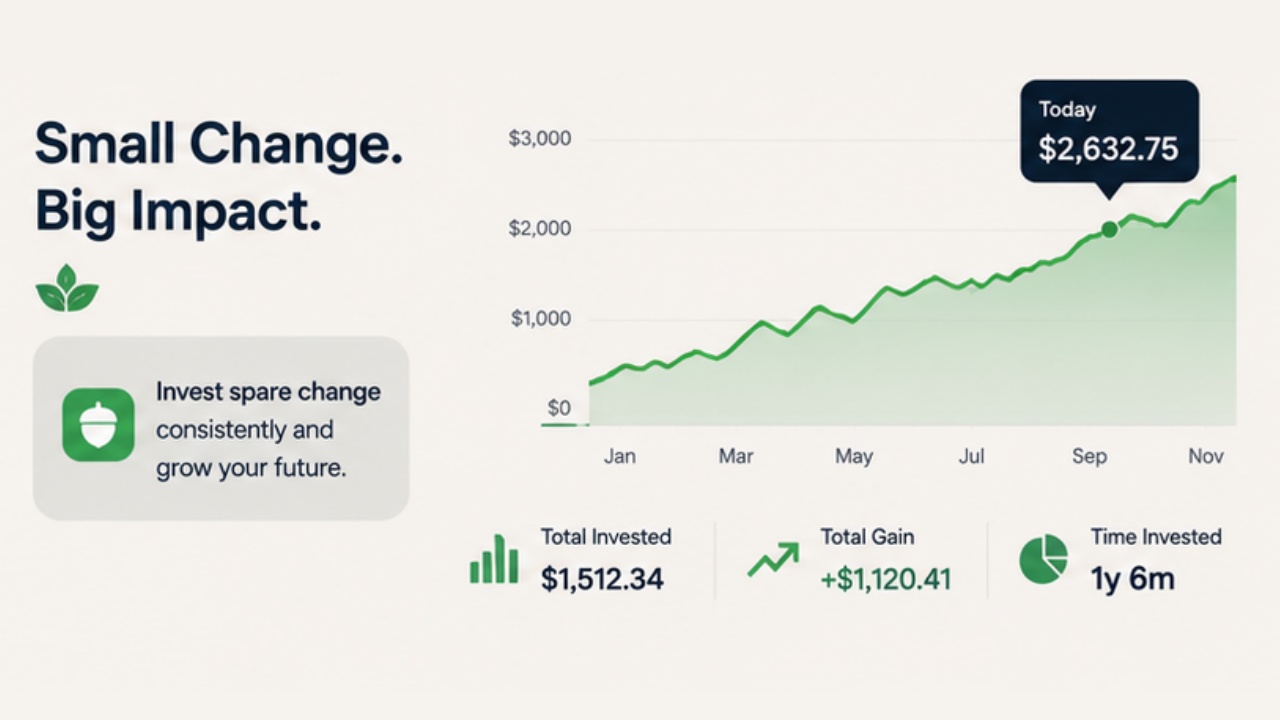
That’s exactly why spare-change investing apps exploded in popularity. Instead of asking users to invest hundreds of dollars upfront, these apps quietly round up everyday purchases—coffee runs, grocery orders, gas station stops—and automatically invest the leftover change into diversified portfolApp Store.
When we tested the leading micro-investing apps this year, we focused on one question: which apps actually make investing feel automatic enough that people will stick with it long term?
We looked at:
• How seamless the round-up system feels
• Fees versus actual value
• Portfolio flexibility
• Automation tools
• Beginner friendliness
• Whether the app becomes annoying after a few weeks of use
Here are the four micro-investment apps that stood out the most in 2026.
Availability: App Store and Google Play
Pricing: Subscription plans starting at $6/month, with higher tiers available.
Why It Stands Out
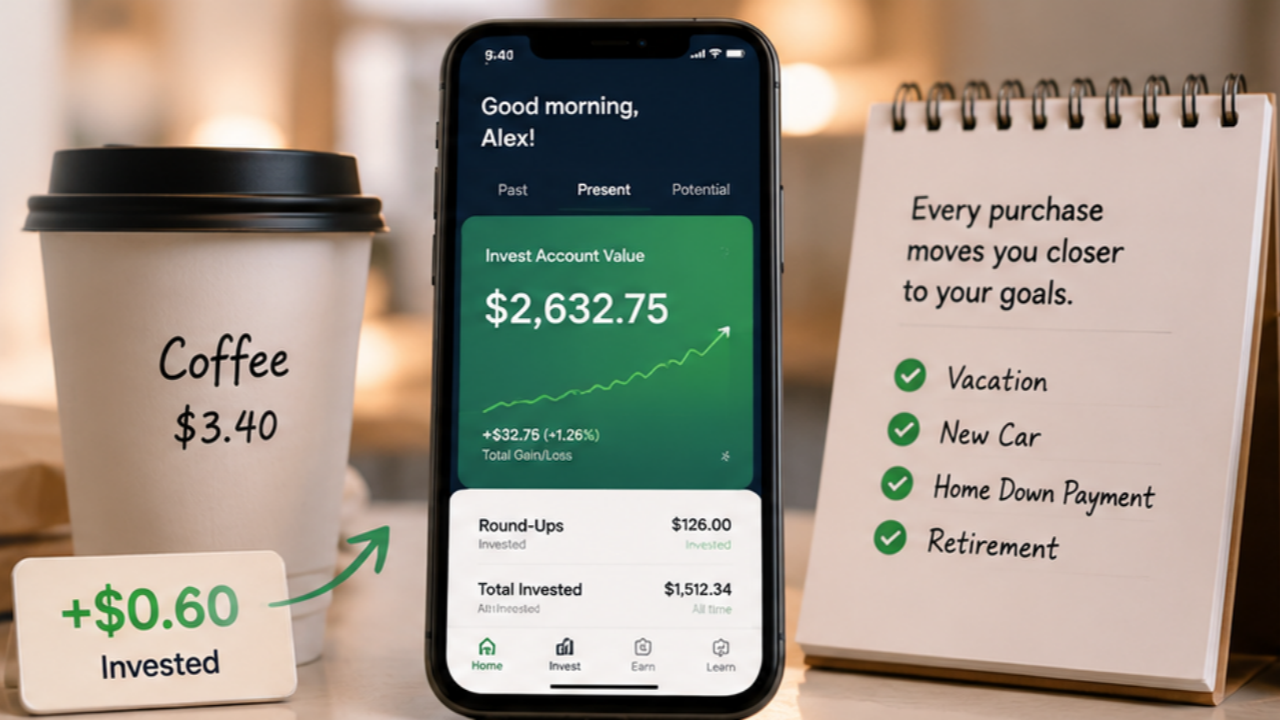
Acorns is still the app most people think of when they hear “spare change investing,” and after testing it extensively, it remains the smoothest overall experience for beginners.
The core feature is called “Round-Ups.” Every purchase gets rounded to the nearest dollar, and the extra cents are automatically invested into a diversified portfolio. Buy a $3.40 coffee, and $0.60 gets invested without requiring any effort from the user.
What impressed us most during testing was how invisible the process feels once everything is connected. After linking cards and bank accounts, the app basically runs in the background. Acorns also allows multiplier options like 2x, 3x, or even 10x round-ups for more aggressive saving. Reddit users repeatedly described it as a strong “set it and forget it” investing app for beginners.
The educational tools are also much stronger now than they were a few years ago. Instead of overwhelming users with stock jargon, the app focuses on habit-building and long-term investing behavior.
Pros
• The easiest spare-change investing setup available
• Excellent for complete beginners
• Fully automated investing
• Diversified portfolApp Store handled automatically
• Helpful educational content
Cons
• Monthly subscription can feel expensive for small balances
• Less flexibility than traditional brokerages
• Advanced investors may outgrow it quickly
Availability: App Store and Google Play
Pricing: Subscription-based plans starting around $3/month.
Why It Stands Out
Stash takes a slightly different approach from Acorns. Instead of focusing purely on automation, it blends micro-investing with guided investing education.
The app still supports automated investing and recurring deposits, but during testing it felt more hands-on and customizable. Users can choose themed investments, ETFs, and individual stocks instead of relying entirely on robo-managed portfolApp Store.
That extra flexibility makes Stash appealing for people who want to gradually learn investing while still automating part of the process.
Where the app works best is habit formation. The recurring investment system is simple to configure, and the app constantly nudges users toward building long-term consistency rather than chasing quick returns.
Pros
• More customizable than Acorns
• Beginner-friendly investing education
• Supports both ETFs and individual stocks
• Easy recurring investment setup
Cons
• Subscription fees can eat into small portfolApp Store
• Interface sometimes feels cluttered
• Less “fully automatic” than true round-up apps
Availability: App Store and Google Play
Pricing: Free basic account; optional Robinhood Gold subscription available.
Why It Stands Out
Robinhood is not a traditional spare-change investing app in the same way Acorns is, but it has become increasingly popular among younger users who want lightweight automation without monthly subscription fees.
When we tested it, Robinhood worked best for users who eventually want more investing control. The app combines recurring investments, fractional shares, and commission-free trading inside one of the cleanest mobile investing interfaces available.
The downside is that Robinhood requires slightly more involvement from the user. It doesn’t feel as passive or behavior-driven as Acorns. Instead, it works better for people who are comfortable evolving from “micro-investor” into active investor over time.
Pros
• No mandatory monthly fee
• Extremely clean app design
• Fractional investing works well
• Easy transition into broader investing
Cons
• Less focused on automated round-ups
• Can tempt beginners into active trading
• Educational support isn’t as strong as Acorns
Availability: App Store and Google Play
Pricing: Subscription-based plans available.
Why It Stands Out
Qapital feels less like a traditional investment platform and more like an automation engine for saving and investing.
Instead of relying only on spare change round-ups, the app allows users to create highly customized money rules. During testing, we could automatically invest money whenever we skipped takeout, stayed under a shopping budget, or hit savings milestones.
That flexibility makes Qapital uniquely effective for people who struggle with consistency. It turns investing into a behavioral system instead of a manual financial task.
The app also has one of the strongest goal-based interfaces we tested, making it easier to visualize long-term progress.
Pros
• Highly customizable automation rules
• Great for building financial habits
• Goal-focused interface feels motivating
• Strong budgeting integrations
Cons
• Subscription pricing may deter casual users
• Less investment-focused than brokerages
• Advanced investors may want more portfolio control
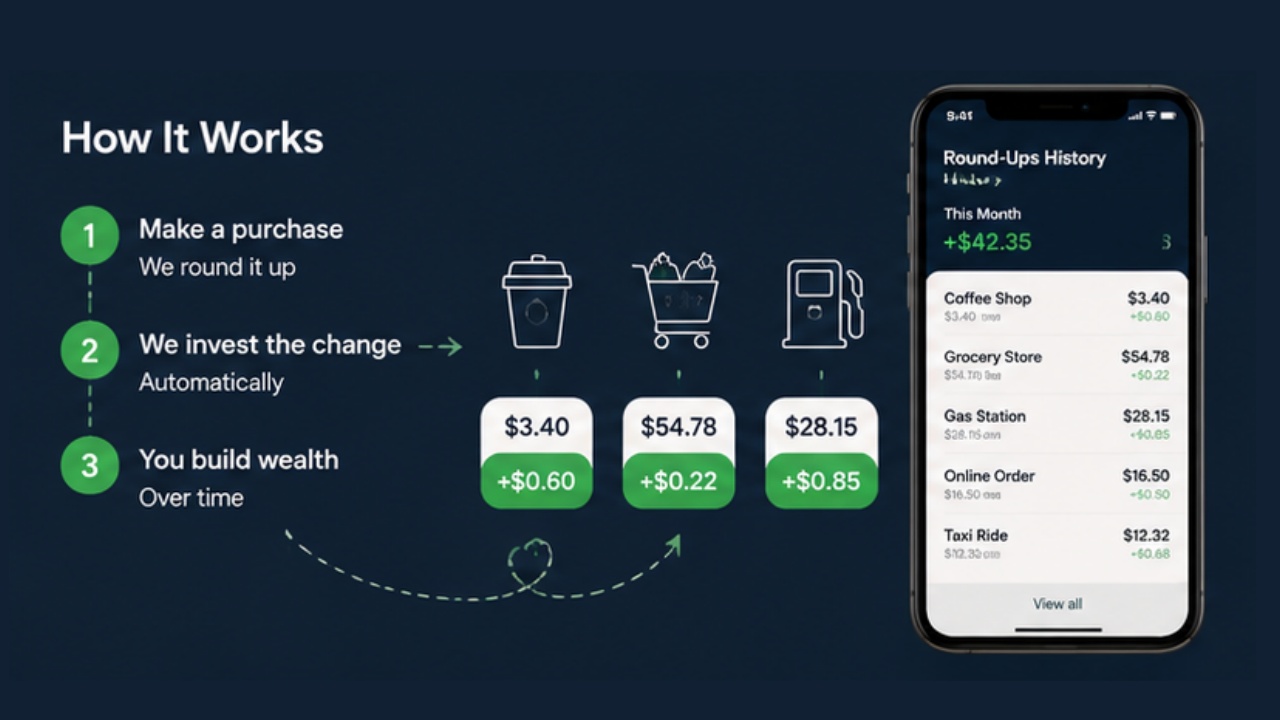
For most people looking to automate investing with as little friction as possible, Acorns is still the strongest overall choice in 2026.
Its round-up system remains the smoothest in the industry, and the entire experience is built around making investing feel effortless instead of intimidating. While the monthly subscription can feel steep for smaller balances, the automation, portfolio management, and beginner-friendly design make it one of the easiest ways for new investors to start building long-term habits.