

Getting from Point A to Point B has never involved more choices.
In many cities, travelers can choose between ride-sharing services, traditional taxis booked through an app, electric scooters, shared bikes, public transit integrations, and even rental cars—all from a smartphone. The challenge isn't finding transportation; it's choosing the platform that delivers the best combination of availability, price, convenience, and reliability.
For this review, several leading transportation apps available on the US Apple App Store and Google Play Store were evaluated based on:
Availability across major cities
Booking reliability
Pricing transparency
Alternative transportation options
Overall user experience
The focus was specifically on apps that help travelers book on-demand transportation rather than long-term car rentals or public transit planning alone.
iOS
Android
Among all apps tested, Uber continues to offer the broadest transportation ecosystem.
In addition to traditional ride-sharing, many cities now support Uber Reserve for scheduled rides, Uber Shuttle in select markets, and integrations with taxis or public transportation depending on the location. The app's global footprint also makes it one of the few services travelers can rely on across dozens of countries with a familiar interface.
During testing, estimated arrival times were generally accurate, and driver availability remained consistently strong in large metropolitan areas.
Extensive international availability
Multiple ride categories
Reliable ETA estimates
Cashless payments
Easy trip sharing for safety
Surge pricing during peak demand
Prices can exceed traditional taxis during busy periods
Availability varies in smaller towns
Free app
Users pay per ride
Optional Uber One subscription for eligible savings and benefits
Travelers seeking dependable transportation almost anywhere.
iOS
Android
Lyft remains Uber's strongest competitor in North America.
Testing showed competitive pricing, an intuitive booking process, and excellent driver coverage in most major U.S. cities. Lyft also integrates bike-share and scooter rentals in participating markets, making it useful for shorter urban trips where a car isn't necessary.
For domestic travel within the United States, Lyft often matched or undercut Uber's fares.
User-friendly interface
Competitive pricing
Bike and scooter integration in many cities
Reliable airport pickup service
Primarily limited to the U.S. and Canada
Smaller driver network in some regions
Peak pricing still occurs during busy periods
Free app
Pay per ride
Optional Lyft Pink membership
Domestic travelers exploring North American cities.
iOS
Android
Bolt has expanded rapidly across Europe, Africa, and selected markets in other regions, making it an attractive alternative for international travelers.
During testing in supported cities, pricing was frequently lower than competing ride-sharing services. Depending on the location, the app also offers scooters, e-bikes, and car rentals through the same interface.
Travelers should verify availability before departure, as Bolt is not currently available throughout the United States.
Competitive pricing
Strong European coverage
Multiple transportation options
Simple booking experience
Limited or unavailable in many U.S. markets
Coverage varies by country
Driver availability depends on local demand
Free app
Pay per ride
International travelers visiting Europe and other supported regions.
iOS
Android
Free Now differs from traditional ride-sharing apps by combining licensed taxis with private hire vehicles and, in many cities, shared e-scooters and e-bikes.
During testing in major European cities, the ability to compare transportation types within one app proved especially useful. Travelers who prefer regulated taxi services without hailing one on the street will appreciate its flexibility.
Licensed taxi bookings
Multiple transportation options
Strong European city coverage
Transparent fare estimates
Limited availability outside Europe
Not designed for North American travel
Service offerings differ by city
Free app
Pay per ride
Travelers exploring European metropolitan areas.
iOS
Android
Not every journey requires a car.
Bird specializes in electric scooter and e-bike rentals, providing a fast and affordable solution for covering short distances in participating cities. During testing, it was especially useful for downtown travel, sightseeing, and avoiding traffic congestion.
For trips under a few miles, scooters often proved faster than waiting for a ride-share vehicle.
Fast access to scooters and e-bikes
Convenient for short trips
Easy app interface
Available in many urban areas
Availability depends on city regulations
Weather can limit usefulness
Not suitable for luggage or long distances
Free app
Pay per ride based on local pricing
Urban sightseeing and first- or last-mile transportation.
For travelers seeking one app that works reliably across a wide variety of destinations, Uber remains the strongest overall recommendation.
Its combination of global availability, multiple ride categories, scheduled bookings, and broad driver network makes it the most versatile transportation platform for both domestic and international travel.
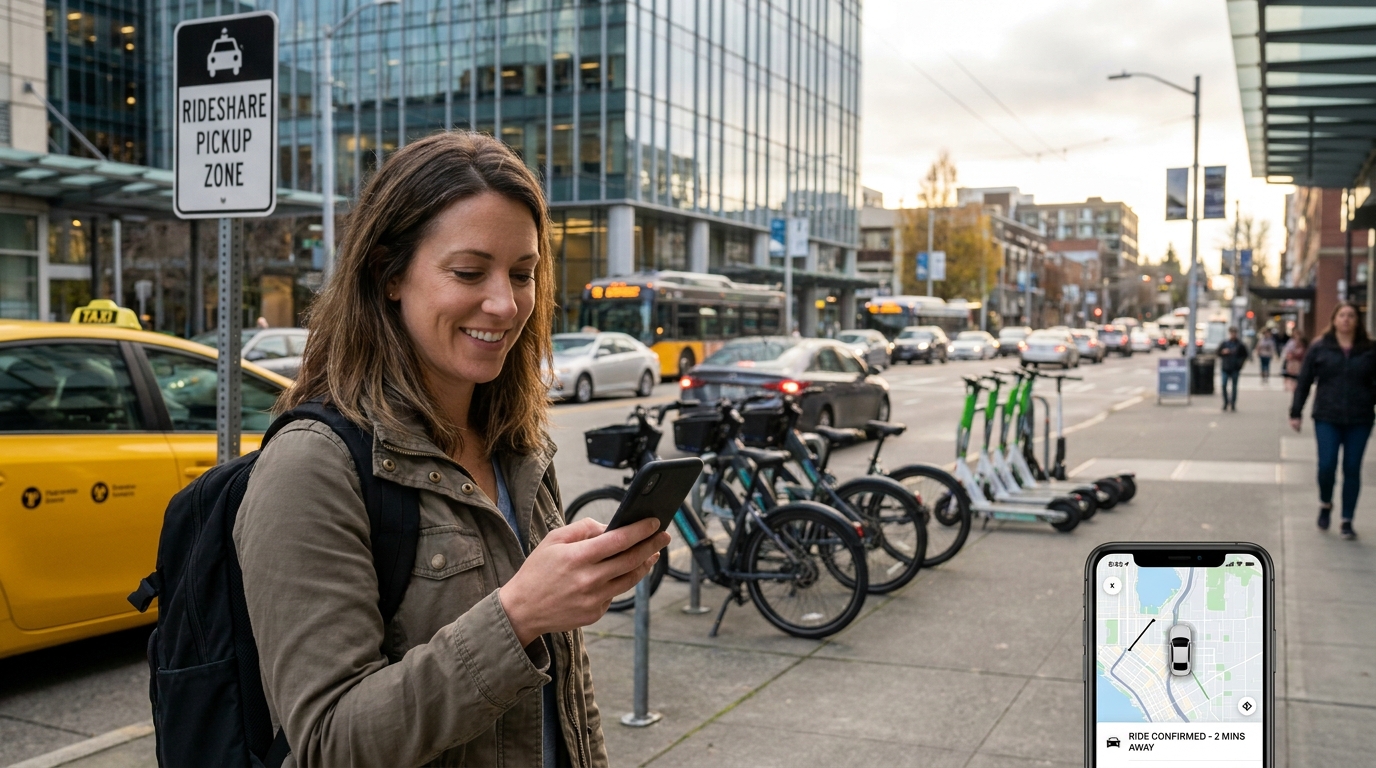
That said, different travel situations call for different tools:
Best Overall Ride-Sharing App: Uber
Best for U.S. and Canada: Lyft
Best International Alternative: Bolt
Best for European Taxi Bookings: Free Now
Best Alternative Urban Transportation: Bird
Experienced travelers often keep at least two transportation apps installed. Comparing fares and wait times between Uber and Lyft in North America—or Uber and Bolt in Europe—can often reduce costs while increasing the chances of finding a ride quickly during peak travel periods.